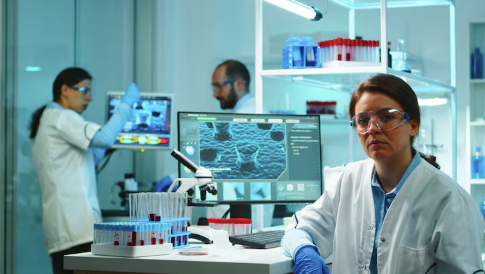
AI is transforming healthcare through various applications that enhance efficiency and accuracy. It improves diagnostic capabilities by analyzing complex data patterns. Administrative burdens are reduced, allowing healthcare providers to focus more on patient interaction. Additionally, AI personalizes treatment plans and refines medical imaging techniques. As these technologies continue to evolve, they present both opportunities and challenges in the healthcare landscape. Understanding these developments is crucial for future advancements in patient care.
Enhancing Diagnostic Accuracy
As healthcare systems increasingly integrate artificial intelligence, enhancing diagnostic accuracy has become a primary focus.
Machine learning algorithms analyze vast datasets, identifying patterns that improve disease detection. Predictive analytics further refines this process by forecasting patient outcomes, enabling timely interventions.
This synergy not only empowers healthcare professionals but also fosters patient autonomy, ensuring informed decisions in their care journey.
Streamlining Administrative Processes
The integration of artificial intelligence in healthcare extends beyond diagnostic improvements, significantly impacting administrative processes.
By automating scheduling, AI reduces the burden on staff and enhances efficiency. Furthermore, it aids in reducing paperwork through intelligent document management systems that streamline data entry and retrieval.
These advancements allow healthcare professionals to allocate more time to patient care, ultimately fostering a more effective healthcare environment.
Personalizing Patient Care
Personalized patient care has emerged as a transformative approach within healthcare, leveraging artificial intelligence to tailor treatment plans to individual needs.
By analyzing patient data, AI enhances patient engagement and facilitates precise treatment recommendations.
This individualized strategy not only improves patient outcomes but also fosters a collaborative environment where patients actively participate in their healthcare decisions, ultimately promoting autonomy and satisfaction.
See also: How 5G Improves Mobile Technology
Improving Medical Imaging Techniques
While advancements in artificial intelligence continue to reshape various aspects of healthcare, one of the most significant impacts is seen in the realm of medical imaging techniques.
AI enhances image analysis through sophisticated predictive algorithms, enabling more accurate diagnoses. These technologies reduce human error, streamline workflows, and provide clinicians with vital insights, ultimately improving patient outcomes and fostering a more efficient healthcare environment.
Conclusion
In conclusion, the integration of AI in healthcare stands as a beacon of innovation, illuminating pathways to improved patient outcomes and operational efficiency. By enhancing diagnostic accuracy, streamlining administrative workflows, personalizing treatment plans, and revolutionizing medical imaging, AI not only transforms patient care but also redefines the role of healthcare professionals. As this technology continues to evolve, the question remains: how far can AI push the boundaries of what is possible in medicine?